Summary
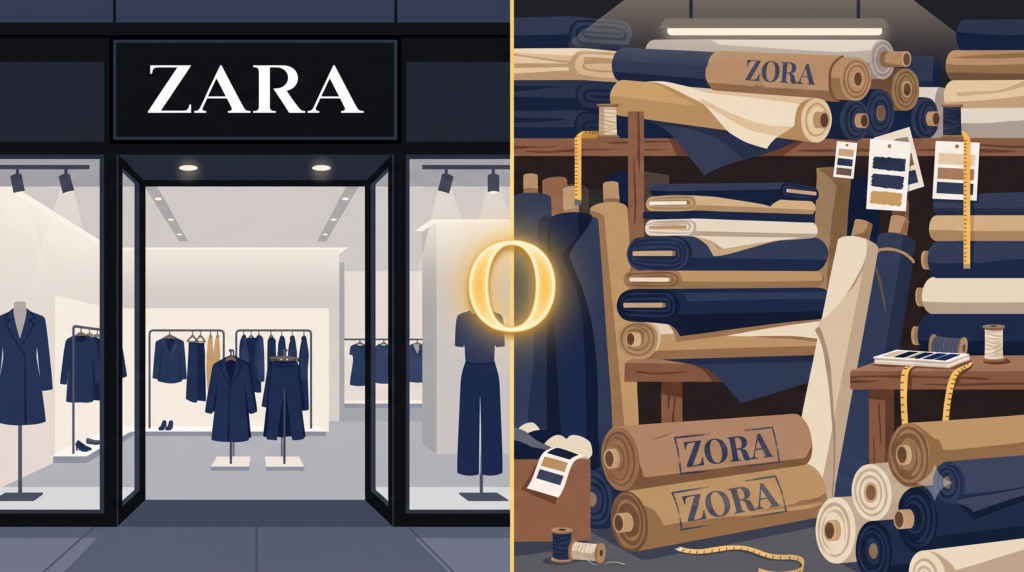
Industria De Diseno Textil, S.A. ("Inditex"), the Spanish fashion conglomerate behind ZARA, opposed a small Delhi trader's registration of the mark ZORA for polyester lining fabric, but the Registrar of Trade Marks dismissed the opposition and let ZORA proceed to registration. In the Zara Zora trademark dispute, Inditex approached the Delhi High Court, arguing that the Registrar had wrongly dissected the marks letter by letter instead of comparing them as a whole, and had ignored ZARA's well-known status altogether. The Delhi High Court held that ZARA qualifies for protection as a well-known mark under Section 11(2) of the Trade Marks Act even without a formal declaration, and that ZARA and ZORA are deceptively similar when judged as whole marks. It quashed the Registrar's order and directed cancellation of the ZORA registration. The ruling matters because it clarifies that reputation, not paperwork, decides whether a mark deserves cross-class protection.
Background
A four-letter mark and a single vowel were enough to drag a global fashion empire into a five-year trademark battle before the Delhi High Court, testing how far a brand’s reputation can travel when the law asks whether two names truly look and sound alike, an inquiry at the heart of the Zara Zora trademark dispute.
Industria De Diseno Textil, S.A. (“Inditex”), the Spanish conglomerate behind the ZARA chain of stores, is the appellant. ZARA was conceived in 1975, entered India through contract manufacturers by 1986-87, and now runs 21 domestic stores under registrations spanning Classes 16, 24, 25, 26 and 35 of the Trade Marks Act, 1999 (“Trade Marks Act”). The respondents are the Registrar of Trade Marks (“Registrar”) and Aggarwal Bag House, a Sadar Bazar trader that applied in October 2019 to register ZORA for plain, coated, laminated, impregnated and waterproof fabrics in Class 24, claiming use since June 2016. When the ZORA application was advertised, Inditex opposed it, citing its own Class 24 registration of ZARA since 2003 and its well-known status recognised in Industria De Diseno Textile S.A. v. Oriental Cuisines Pvt. Ltd. (2015 SCC OnLine Del 9565). The Registrar dismissed Inditex’s opposition on 8 February 2024, holding the marks phonetically and visually dissimilar, and a registration certificate for ZORA issued the next day. Inditex then filed a statutory appeal under Section 91 of the Trade Marks Act before the Delhi High Court.
Issues
-
- Whether the Registrar erred by dissecting ZARA and ZORA into syllables instead of comparing the marks as a whole, contrary to the anti-dissection rule.
- Whether ZARA qualifies for protection as a well-known mark under Section 11(2) of the Trade Marks Act without a prior formal declaration.
- Whether dissimilarity of goods defeats an opposition once a mark is shown to be well known under Section 11(2).
- Whether evidence of actual consumer confusion is a precondition for relief under Section 11(2).
Inditex’s Arguments
-
- The Registrar wrongly split ZARA and ZORA into “ZA/ZO” and “RA,” violating the anti-dissection rule affirmed in Corn Products Refining Co. v. Shangrila Food Products Ltd. and M/s. South India Beverages Pvt. Ltd. v. General Mills Marketing & Anr.
- Vowel substitutions such as O for A rarely defeat phonetic similarity, as seen in prior rulings comparing ESSCO/OSSO and FORTIS/FERTIS.
- ZARA’s scale, over 400 group companies and Indian sales traced to 1986-87, established well-known status under Sections 2(1)(zg) and 11(6), entitling it to protection under Section 11(2) regardless of formal declaration.
- Aggarwal Bag House’s turnover rose from about Rs. 2.45 crore in 2016-17 to over Rs. 31 crore by 2023 after adopting ZORA, evidencing dishonest adoption.
- Aggarwal Bag House’s shifting explanations for the meaning of “ZORA” undermined its claim of honest adoption.
Aggarwal Bag House’s Arguments
-
- ZORA was adopted for its meaning “dawn,” symbolising a new fabric offering, and bore no relation to ZARA.
- The prefixes “ZA” and “ZO” were phonetically and visually distinct, as the Registrar found, relying on Diageo North America, Inc. v. Shiva Distilleries Ltd.
- ZARA was not a formally declared well-known mark, so Section 11(2) protection against dissimilar goods was unavailable.
- The goods were genuinely dissimilar: Aggarwal Bag House sold raw polyester lining fabric wholesale from a small Sadar Bazar shop, while ZARA sold finished retail products through showrooms.
- No evidence of actual confusion existed, and Inditex had never filed a passing-off action against Aggarwal Bag House.
- Under Vishnudas Trading v. Vazir Sultan Tobacco Co. a registered proprietor cannot claim monopoly across unrelated goods.
Court’s Analysis
Reading Marks Whole, Not in Pieces
The court held that comparing ZARA and ZORA by isolating “ZA” and “ZO” while ignoring the shared suffix “RA” was legally untenable, since Corn Products Refining Co. v. Shangrila Food Products Ltd. requires marks to be judged as a whole through the eyes of a consumer with average intelligence and imperfect recollection. The court observed that both marks share four letters, an identical opening consonant “Z,” an identical closing sound “RA,” and the same overall rhythm, so an ordinary purchaser would carry away a near-identical impression despite the differing vowel. The court reasoned that treating “O” and “A” as a fatal point of difference ignored how Indian consumers actually pronounce and recall foreign-sounding marks, a concern the Zara Zora trademark dispute repeatedly brought into focus.
Fame Doesn’t Need a Certificate
The court noted that Section 11(2) of the Trade Marks Act speaks of a mark that “is” well known in India, not one formally “declared” well known, and that Explanation (b) to Section 11 confirms an earlier mark need only be “entitled” to that protection. The court further observed that requiring a prior declaration would make Section 11(5) and Rule 43 of the Trade Marks Rules, 2017 redundant, since both provisions assume a proprietor can raise well-known status for the first time in opposition. The court found that Inditex’s documented scale, its group companies, thousands of stores, and Indian sales traced back to 1986-87 through contract manufacturers, satisfied the factors listed in Section 11(6), reputation already recognised in Industria De Diseno Textile S.A. v. Oriental Cuisines Pvt. Ltd.. This finding is central to the Zara Zora trademark dispute because it frees well-known-mark protection from dependence on a formal registry list.
Why Dissimilar Goods Didn’t Matter
The court opined that once a mark clears the well-known threshold, Section 11(2) protects it even against unrelated goods, since the provision is anchored in dilution and unfair advantage rather than consumer confusion, following the reasoning in Sanjay Chadha and Another v. Union of India and Another. The court stated that the Registrar’s search for evidence of actual confusion was a misplaced enquiry, because Section 11(2) asks whether use of the later mark would be detrimental to or take unfair advantage of the earlier mark’s distinctive character, not whether buyers were literally deceived. The court also found, in the alternative, that a genuine trade connection existed since polyester fabric supplied to bag and textile manufacturers overlapped with ZARA’s own dealings with manufacturers and traders of bags, belts and home textiles.
Reading the Timeline of Adoption
The court held that Aggarwal Bag House’s shifting explanations for the word “ZORA,” first a Hindi name and later an English word for “dawn,” coupled with a more than tenfold jump in turnover after 2016, supported an inference that the mark was adopted to trade on ZARA’s established goodwill rather than for any independent commercial reason.
Findings
In view of the observations and the arguments presented by both the parties, the Delhi High Court held that:
-
- Section 11(2) of the Trade Marks Act protects ZARA as a well-known trademark, and no prior formal declaration of that status is required before opposing a conflicting application.
- ZARA and ZORA are deceptively similar, both phonetically and visually, when compared as whole marks rather than dissected into syllables.
- Dissimilarity of goods does not defeat opposition once the earlier mark is shown to be well known, since Section 11(2) protects against dilution and unfair advantage regardless of the goods involved.
- The Registrar’s order dated 8 February 2024 rejecting Inditex’s opposition is quashed and set aside.
- The registration of ZORA under No. 4310686 in Class 24 stands cancelled.
- The Registrar of Trade Marks is directed to remove the ZORA entry from the Register within two months.
Case Citation: Industria De Diseno Textil, S.A. v. Registrar of Trade Marks & Anr., C.A.(COMM.IPD-TM) 52/2024, Delhi High Court, decided on 6 July 2026. Available at https://indiankanoon.org/doc/68296775/
Authored by Gaurav Mishra, IP Attorney, BananaIP Counsels