Summary
Nayasa Superplast, registered proprietor of a casserole design, obtained an ex parte ad interim injunction against Shree Ji Industries for design infringement, copyright infringement and passing off. Shree Ji sought to vacate it, alleging prior published designs, functional features and suppression by Nayasa. The Delhi High Court held that the material was disputed, undated or post-dated and needed a feature-by-feature comparison, so no credible challenge to design registration was made out. The ruling shows how much evidence a defendant needs to dislodge an interim design injunction.
Background
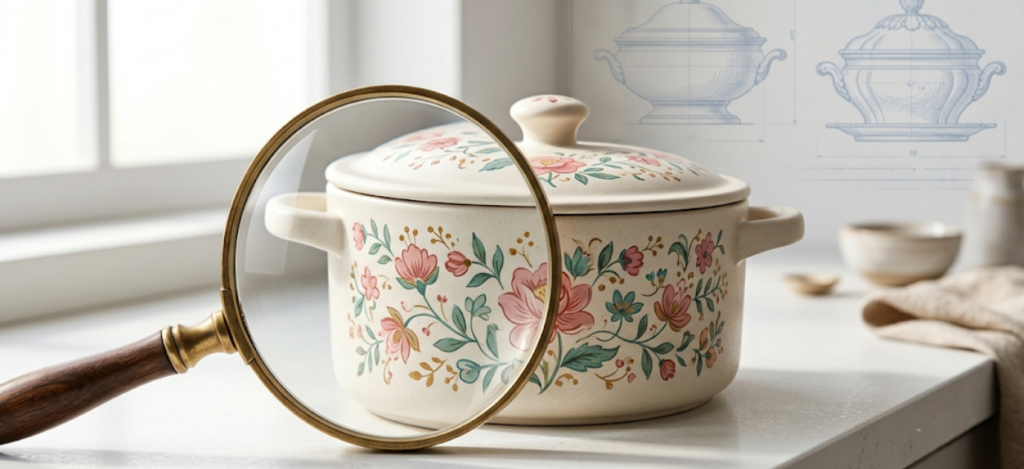
A casserole with a lid, a knob and two handles looks familiar in every kitchen, and that familiarity became the centre of a dispute over how far a registered design can be attacked at the interim stage. The Delhi High Court had to decide whether a credible challenge to design registration, raised after an ex parte order, was enough to undo that order.
M/S Nayasa Superplast (“Nayasa”) is the registered proprietor of a design in Class 07-02 for the article “Casserole”, registered on 9 August 2019 and valid till 9 August 2029. It also claims copyright in the floral artwork printed on its casserole. Nayasa found a casserole sold by M/S Shree Ji Industries (“Shree Ji”) in July 2025 and issued a cease-and-desist notice on 22 July 2025, which Shree Ji rejected in replies of 31 July and 19 August 2025.
Nayasa sued before the Commercial Court at Tis Hazari, Delhi, for infringement of the design and copyright, passing off, damages and delivery up. On 11 December 2025, the Commercial Court granted an ex parte ad interim injunction, observing that the impugned design, colour arrangement and artwork were prima facie substantially identical to Nayasa’s registered design and artwork.
Shree Ji applied to vacate that injunction, contending that it contravened Sections 4 and 19 of the Designs Act, 2000 (“Designs Act”). The application came up before the Delhi High Court in CS(COMM) 399/2026, which decided it on 29 October 2026.
Issues
-
- Whether Nayasa’s alleged suppression of prior designs and concealment of a colour-specific registration warranted vacating the ex parte ad interim injunction.
- Whether Shree Ji had made out a credible challenge to design registration under Section 4 and Section 19 of the Designs Act, read with Section 22(3), on grounds of novelty, significant distinction and functionality.
- Whether Nayasa’s copyright and passing off claims survived the challenge to the design registration.
- Whether prima facie case, balance of convenience and irreparable injury still supported the injunction.
Shree Ji Industries’ Arguments
-
- The injunction contravened Sections 4 and 19 of the Designs Act, as almost similar designs are in use by others.
- Eight third-party design registrations filed between 26 May 2003 and 22 July 2019, museum images of 18th and 19th century porcelain tureens, an Etsy bowl listing with reviews dated 16 November 2009, and Amazon.in and Rishabh Plastic Products LLP listings showed prior disclosure.
- The suit design is not significantly distinguishable from known designs or a combination of known designs, and its features are dictated by function.
- Nayasa applied whitener to the certificate to hide that the registration is colour-specific (pink, green and yellow) and suppressed prior designs, so it came with unclean hands.
- Shree Ji’s product is plain, unlike Nayasa’s ornamented one, the floral artwork is generic, and no passing off exists.
Nayasa Superplast’s Arguments
-
- The interim order records adequate reasons, and significant distinguishability is a matter for trial.
- There was no tampering. The registration claims novelty in “shape and configuration”, the representations are in greyscale, and the original certificate will be produced.
- Shree Ji’s material is undated, unrelated, or, like the Rishabh registrations of 8 October 2020, later than the suit design. None of the eight earlier registrations shares its features.
- Vacating the injunction would gravely prejudice Nayasa, whose interim injunction application is pending.
Court’s Analysis
Vacating an ex parte order in an intellectual property suit
The court noted that, in an intellectual property suit, vacating an ex parte injunction requires examining both infringement and whether the defendant has raised a credible challenge to the validity of the registration. The court observed that the usual test of prima facie case, balance of convenience and irreparable injury also decides whether the order should continue, and that vacation is possible where the order rested on a knowingly false statement or suppression of material facts.
Clean hands need proof, not allegation
The court found that the tampering allegation could not be accepted on rival affidavits. It noted that Shree Ji relied only on the copy Nayasa had filed, with no certified copy or Design Office record showing a colour-specific registration, and left the exact scope of the registration open for the interim injunction hearing. On suppression, the court observed that Shree Ji found the prior designs through its own due diligence and nothing showed Nayasa knew of them. The court stated that non-disclosure, by itself, is not suppression of a material fact.
What a credible challenge to design registration demands
The court observed that Section 4 bars registration of designs that are not new or original, were previously disclosed, or are not significantly distinguishable from known designs, while Section 19 permits cancellation on these grounds and Section 22(3) makes them available as defences. At the interim stage, the court reasoned, it asks only whether the defendant has raised a credible challenge to design registration, which need not conclusively prove invalidity but cannot be fanciful. Relying on Bharat Glass Tube Ltd. v. Gopal Glass Works Ltd. ((2008) 10 SCC 657), the court held that the burden of showing lack of novelty lies on the party alleging it, and that the comparison must be of the design as applied to the article.
Why the prior art fell short
The court found that the tureen images showed only the general form of a covered vessel, whereas Nayasa claims a particular shape and configuration of a casserole, which needs a feature-by-feature comparison. The court noted that the Etsy listing described a soup or cereal bowl, the 2009 date belonged to seller reviews, the Amazon.in listings were undated and the Rishabh registrations post-dated the suit design. For the eight earlier registrations, which Shree Ji itself described as differing by minor changes, the court observed that a comparison of registered representations was needed, and it rejected the functionality plea as a bare assertion. The court distinguished Novamax Industries LLP v. Prem Appliances (CS(COMM) 177/2021, order dated 16.01.2023), where prior publication was proved from the plaintiff’s own website and invoices.
Independent claims and balance of convenience
The court observed that the two designs have almost similar configuration and that Shree Ji conceded their functional skeletons may be similar. It held that the copyright and passing off claims are independent causes of action, unaffected by a challenge under Sections 4 and 19. The court noted that Shree Ji offered only a bare statement of prejudice, without sales figures, and reasoned that vacating the order on a tentative view would not serve justice, since no credible challenge to design registration had been made out.
Findings
In view of the observations and the arguments presented by both the parties, the Delhi High Court held that:
-
- Shree Ji did not show that Nayasa knowingly made a false or misleading statement about the certificate, and the registration’s scope is left open.
- Non-disclosure of prior designs that Shree Ji found through its own due diligence does not amount to suppression of a material fact.
- Shree Ji’s prior art material is disputed, undated, post-dated or needs detailed comparison, so no credible challenge to design registration under Sections 4, 19 and 22(3) is yet made out.
- The functionality plea cannot be accepted on a bare assertion in the application.
- Nayasa’s copyright and passing off claims are independent of the challenge to the design registration.
- The balance of convenience does not favour vacating the injunction, as Shree Ji placed no material on the extent of its prejudice.
- The application to vacate stands disposed of, the injunction continues, and the interim injunction application is listed on 23 November 2026, with all contentions open.
Case Citation: M/S Nayasa Superplast v. M/S Shree Ji Industries, CS(COMM) 399/2026, I.A. 12420/2026, High Court of Delhi, decided on 29 October 2026. Available at https://indiankanoon.org/doc/11254204/
Authored by Gaurav Mishra, Patent and Design Attorney, BananaIP Counsels