Summary
Former India captain Sourav Ganguly and Luv Films, the producer of his authorised biopic, sued the makers of the Hindi docudrama Doosra for weaving his identity, career milestones and famous Lord's celebration into a fictional story without his consent. The makers argued that the film was a fictional tale built around a woman named Tara, that the archival footage was fully licensed, and that Ganguly had known about the project since 2017. The Delhi High Court, after viewing the film, found a prima facie case of unauthorised commercial exploitation of Sourav Ganguly personality rights. Since the film was already in theatres and scene deletion was unworkable, the Court allowed screening only on condition of prominent disclaimers and a ₹2 crore bank guarantee, failing which a sweeping injunction would apply. The ruling draws a clear line between footage licences and personality consent, and between depicting history and trading on a celebrity's fame.
Background
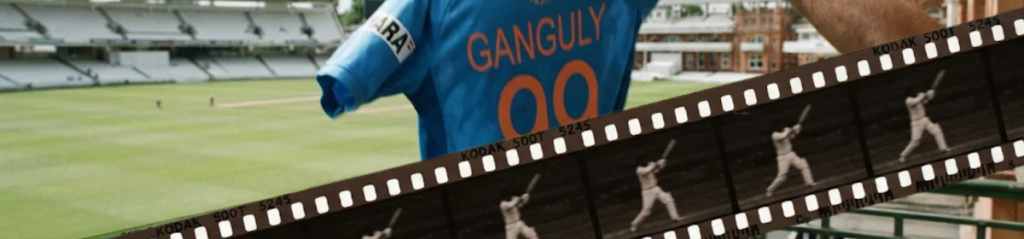
A fictional heroine, about four minutes of licensed match footage and one of Indian cricket’s most famous celebrations at Lord’s have together produced a significant interim ruling on Sourav Ganguly personality rights. The Delhi High Court has held that a film which repeatedly invokes a living sporting icon to sell its story cannot shelter behind the label of fiction.
Sourav Ganguly (“Ganguly”), former captain of the Indian national cricket team, sued with Luv Films (“Luv Films”), which holds his life rights under a 2021 agreement for the biopic Dada: The Sourav Ganguly Story. The defendants were Masha Sajdeh and others, the producers and director of the Hindi docudrama Doosra (“Doosra Makers”), and its distributor.
Between 2017 and 2019, the Doosra Makers sought interviews with Ganguly for what was pitched as a documentary, and his manager flagged its overlap with a planned biopic. A June 2019 teaser presented the project as the story of how cricket changed India, seen through a young girl’s eyes. After seven quiet years, the trailer appeared on 12 October 2026, soon after the biopic’s first-look poster. Ganguly sued on 21 October. The Court declined a pre-release stay, and Doosra released on 23 October 2026. After viewing the film, teaser and trailer, the Court ruled on 6 November 2026.
Issues
-
- Whether the use of Ganguly’s name, achievements and shirt-waving celebration in Doosra and its promotional material prima facie infringes his common law personality rights and right of publicity.
- Whether licences for archival match footage obtained under the Copyright Act, 1957 (“Copyright Act”) amount to consent to exploit Ganguly’s persona.
- Whether the 2017 to 2019 correspondence established consent or acquiescence, and whether the suit was barred by delay and laches.
- Whether the public-record principle defeats the claim.
- What interim relief suits a film already in theatres.
Ganguly’s and Luv Films’ Arguments
-
- The Doosra Makers used Ganguly’s persona, the 2002 NatWest Final and his shirt-waving celebration at Lord’s as commercial attractions without consent.
- Footage licences covered copyright in the clips only and could not operate as a personality rights release.
- The film repeatedly paralleled his career with Tara’s story about sexuality and marriage, linking his persona to a personal story that is not his own.
- About 25 to 27 seconds of the 132-second trailer featured Ganguly.
- Preliminary interview talks were not consent, the cause of action arose with the October 2026 trailer, and the timing of release after the biopic announcement showed mala fides.
Doosra Makers’ Arguments
-
- Ganguly knew of the project since 2017, so the delay barred interim relief and damages would suffice.
- Doosra is a docudrama about Tara, with Ganguly appearing as her inspiration through about four minutes of footage licensed from owners including the BCCI.
- Personality rights require endorsement or association, which the film did not convey.
- Historic sporting events are matters of public record and legitimate subjects of comment under Rajagopal v. State of Tamil Nadu ((1994) 6 SCC 632). Upholding the claim would chill free speech and the fictionalisation of history.
- The balance of convenience favoured the makers, who had signed worldwide OTT deals.
Distributor’s Arguments
-
- As a mere distributor with no role in content, it should face no monetary direction.
Court’s Analysis
Validity and Identifiability: An Easy Threshold
The court noted that the right of publicity gives an individual control over the commercial display and exploitation of his name, image, likeness and persona. Applying the twin test of validity and identifiability laid down in Titan Industries Ltd. v. Ramkumar Jewellers (2012 SCC OnLine Del 2382), the court held that Ganguly owns enforceable rights in his persona and is readily identifiable from the footage. The court observed that the makers did not dispute the existence of Sourav Ganguly personality rights, so the real question was whether the use complained of violated them.
Narrative Function, Not Screen Time
After viewing the film, the court found that Doosra runs two parallel narratives: Tara’s fictional journey and Ganguly’s real cricketing arc up to the 2002 Lord’s triumph. The court observed that family conversations repeatedly invoke his performance and achievements, making him a recurring device that advances Tara’s story rather than a figure in the historical background. The court reasoned that the real distinction lies between depicting a person as part of history and borrowing his fame to attract audiences. The court stated that the parallels between Tara’s awakening and Ganguly’s shirtless celebration did not arise naturally, since other Indian victories could have inspired her without naming him. The court held that four minutes of footage could not settle the matter, because the inquiry turns on how the identity functions within the work and its promotion, and found a prima facie attempt to ride on the coattails of Sourav Ganguly personality rights.
Footage Licences Are Not Personality Licences
The court held that permission from copyright owners to use match footage is distinct from authorisation to commercially exploit the person who appears in it. The court noted that the licences themselves excluded personal rights and therefore could not be read as Ganguly’s consent.
Knowing About a Film Is Not Consenting to It
The court found that the 2017 to 2019 exchanges concerned a documentary interview Ganguly never committed to, and that the 2019 teaser portrayed Indian cricket broadly while the trailer centred on one captain. The court rejected the plea of delay, and noted that the release immediately after the biopic announcement raised a prima facie inference of intent to exploit his persona.
Public Record Is No Answer to Commercial Appropriation
The court opined that while matters of public record fall outside privacy protection, Ganguly’s grievance concerned the commercial use of his identity to generate interest in the film, not the disclosure of private facts.
Why Scissors Were Not the Answer
The court reasoned that Ganguly’s persona was embedded in the way the two narratives were woven together, so deleting scenes would require restructuring the film’s artistic expression, which a judicial direction cannot do. Since the film was already in theatres, the court found that the balance of convenience favoured conditional exhibition over an immediate ban.
Findings
In view of the observations and the arguments presented by both the parties, the Delhi High Court held that:
-
- Ganguly established a prima facie case that the Doosra Makers commercially exploited his personality and publicity rights through the film’s narrative and promotional material, without authorisation.
- Copyright licences for archival footage do not constitute consent to the commercial exploitation of the personality of individuals appearing in it.
- The earlier correspondence showed neither consent nor acquiescence, and the delay plea failed.
- Selective deletion of scenes was not a workable remedy.
- The film may run if, within two days, prominent English and Hindi disclaimers state that it does not intend to infringe Ganguly’s personality rights and that use of his name does not imply consent.
- The Doosra Makers must furnish a ₹2 crore unconditional bank guarantee within two weeks.
- On non-compliance, the defendants stand restrained from exploiting the film in any medium or territory, and from circulating promotional material, including the trailer, that appropriates Ganguly’s persona.
- The observations are confined to the interim application and do not decide the merits of the suit.
Case Citation: Sourav Ganguly & Anr. v. Masha Sajdeh & Ors., CS(COMM) 1156/2026 (I.A. 29441/2026), 2026:DHC:9989, Delhi High Court, decided on 6 November 2026. Available at https://indiankanoon.org/doc/182794759/
Authored by Gaurav Mishra, IP Attorney, BananaIP Counsels