Summary
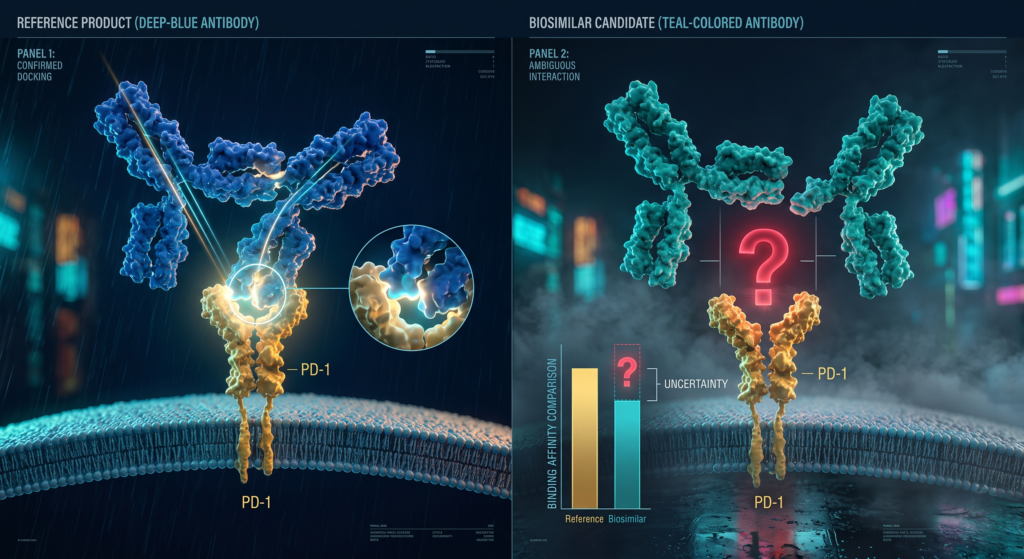
Zydus Lifesciences Limited (“Zydus”) developed ZRC 3276, a biosimilar of Nivolumab (marketed in India as Opdyta), which its patentee E.R. Squibb and Sons, LLC (“E.R. Squibb”) claimed infringed its Indian patent for the 5C4 anti-PD-1 monoclonal antibody. A Single Judge granted an anticipatory injunction against the drug's commercial launch, despite the absence of any product-to-claim mapping. A Division Bench of the Delhi High Court set aside that injunction, holding that biosimilarity with a reference biologic cannot substitute for mapping a defendant's product onto the patented claims. The ruling clarifies that patent infringement is assessed against the four corners of the granted claim, not against a competitor's marketed product, and that a patentee is bound during litigation by technical thresholds it asserted to secure registration.
Background
Cancer immunotherapy patents sit at the sharpest intersection of innovation incentive, patient access, and the limits of judicial inference – and few disputes have illustrated this as vividly as a recent contest over an anti-cancer biosimilar that the patent holder’s own data may not have clearly excluded from the market.
E.R. Squibb and Sons, LLC (“E.R. Squibb” or “Squibb”) is the registered holder of Indian Patent No. IN 340060 (“IN’060” or “suit patent”), titled “Human Monoclonal Antibodies to Programmed Death 1 (PD-1) for use in treating Cancer.” The patented molecule, the 5C4 antibody, is marketed globally as Opdivo and in India under the brand Opdyta. PD-1 is a protein on T-cells that, when bound by ligands on cancer cells, deactivates the immune system’s ability to destroy those cells. Nivolumab (the International Nonproprietary Name, or INN, assigned to 5C4) blocks this pathway, allowing the immune system to attack cancer cells. The two principal claim features in IN’060 are: first, that the antibody binds specifically to human PD-1; and second, that it contains specified amino acid sequences in its heavy and light chains.
Zydus Lifesciences Limited (“Zydus”) developed ZRC 3276, a biosimilar of Nivolumab, and declared that treatment using its product would cost approximately 70% less than Opdyta. Before ZRC 3276 could reach the market, E.R. Squibb filed an anticipatory suit before the Delhi High Court, asserting that the imminent commercial launch would infringe IN’060. A Single Judge granted an interim injunction restraining Zydus from manufacturing or releasing ZRC 3276. Zydus appealed. On January 12, 2026, a Division Bench of the Delhi High Court modified the impugned order by vacating the injunction and directing Zydus instead to maintain and file audited accounts of its revenue from sales of ZRC 3276 with the Court Registry, with advance copies to E.R. Squibb, until the suit patent’s expiry on May 2, 2026.
Issues Before the Court
- Whether product-to-claim mapping under Section 48 of the Patents Act, 1970 (“Patents Act”) is indispensable for establishing patent infringement, including in anticipatory (quia timet) suits where no commercially released product is available
- Whether Zydus’s declaration that ZRC 3276 is a biosimilar of Nivolumab, by itself, established a prima facie case of infringement of IN’060
- Whether the term “binds specifically to human PD-1” in Claim 1 of IN’060 should be read to exclude antibodies that show statistically significant binding with other members of the CD-28 protein family
- Whether representations made by E.R. Squibb during prosecution, in which it defined statistical significance by reference to a ‘p’ value threshold, limited the scope of the suit patent in subsequent infringement proceedings
E.R. Squibb’s Arguments
- ZRC 3276 is a declared biosimilar of Nivolumab; since Nivolumab maps directly onto IN’060, ZRC 3276 also maps onto the suit patent through this biosimilar chain
- Biosimilars are expected, under the Similar Biologics Guidelines issued by the Department of Biotechnology, Government of India, to have the same target amino acid sequence as their reference biologic; ZRC 3276 therefore necessarily carried the same amino acid sequences as 5C4
- Rule 3(A)(ix) of the High Court of Delhi Rules Governing Patent Suits, 2022 (“DHC Patent Suit Rules”) requires claim-chart mapping only “to the extent possible”; in a quia timet action, where no product has been commercially released, direct product-to-claim mapping is impossible, and the qualification accommodates this gap
- The term “specifically” in Claim 1 means high binding preference to PD-1 relative to other receptors, not exclusive binding with zero cross-reactivity
- Test data showed that both Opdivo and ZRC 3276 displayed comparable binding profiles, confirming that ZRC 3276 mapped onto the respondent’s own product
Zydus’s Arguments
- Section 48 of the Patents Act grants a patentee the exclusive right to prevent third parties from dealing in “that product,” meaning the product as defined in the granted claims; patent infringement is a claim-to-product comparison, never a product-to-product comparison
- During pre-grant proceedings before the Patent Office, E.R. Squibb had argued that prior art antibodies were distinguishable because they showed statistically significant binding to non-PD-1 CD-28 proteins, and had defined statistical significance as a ‘p’ value of less than 0.05; ZRC 3276’s ‘p’ value for binding with other CD-28 proteins stood at 0.0001, placing it squarely within Squibb’s own definition of significant cross-reactivity
- Independent testing by Sardar Patel University revealed that Squibb’s own Opdivo product showed the same statistically significant cross-reactivity with non-PD-1 CD-28 proteins, undercutting the premise that product-to-product similarity with Opdivo was a reliable proxy for infringement
- The Similar Biologics Guidelines define similarity in terms of quality, safety and efficacy, without requiring amino acid identity; the impugned judgment itself acknowledged that biosimilars can be “chemically different” from their reference biologics
- Indian law does not recognize patent linkage in pharmaceutical regulatory approvals; filing a biosimilar application is neither an admission of infringement nor a substitute for claim mapping
- The Gillette defence: ZRC 3276 follows prior art antibodies that bind to multiple CD-28 proteins and therefore cannot infringe the suit patent
- Public interest considerations weigh heavily in favour of access to a 70% cheaper cancer therapeutic
Court’s Observations and Analysis
Product-to-claim mapping as the irreducible foundation of patent infringement
The court observed that Section 48 of the Patents Act confers on a patentee the exclusive right to prevent others from making, using, offering, selling, or importing “that product” – the product defined in the granted claims. The court found that “mapping,” though not a term of art, simply means demonstrating that the defendant’s product is the product the plaintiff holds the patent over. The essential features of the patented claim, the court noted, must be identified in the allegedly infringing product; minor workshop improvisations do not escape infringement, but neither does a product escape the inquiry because it resembles another marketed product. The court further observed that where direct product-to-claim mapping is absent, collateral material must be overwhelming and must form a continuous, unbroken chain of circumstances before a court can draw the inference of infringement.
The biosimilar chain cannot substitute for a claim map
The court found that the Single Judge’s “indirect mapping” approach rested on three sequential steps: that 5C4 maps onto Nivolumab; that ZRC 3276 is a biosimilar of Nivolumab; and that biosimilars necessarily share identical amino acid sequences. The court observed that the first step was circular: Nivolumab is the INN assigned to the 5C4 antibody itself, so mapping 5C4 onto Nivolumab amounts to mapping the patent onto its own exemplified molecule, which is self-evident and advances the infringement analysis not at all. On the third step, the court found that the Similar Biologics Guidelines require biosimilars to be “similar in terms of quality, safety and efficacy,” with no requirement of amino acid identity. The impugned judgment itself, the court noted, had acknowledged that biosimilars would be “chemically different” from their reference biologics; a concession that fatally undermined the basis for the indirect mapping conclusion.
Prosecution history estoppel
The court’s analysis on the meaning of “specifically” proved particularly decisive. The court observed that during pre-grant opposition proceedings before the Patent Office, E.R. Squibb had argued that prior art antibodies were distinguishable from its claim because they demonstrated statistically significant binding to non-PD-1 CD-28 proteins, with the threshold for statistical significance set at a ‘p’ value of less than 0.05. ZRC 3276’s ‘p’ value for cross-binding was 0.0001, the court found, a figure Squibb’s own prosecution benchmark would characterize as highly statistically significant. The court held that a patentee who secures registration by representing a particular technical criterion to the Patent Office cannot ignore that criterion in subsequent infringement proceedings. The learned Single Judge had entirely failed to consider this argument despite it being squarely raised by Zydus. That omission, the court stated, was fatal to the impugned order. The court further observed that the impugned judgment’s infringement finding rested on product-to-product mapping rather than product-to-claim mapping, and that even on its own terms, such a comparison could not establish infringement under Section 48.
Public interest and the proportionality of remedy
The court observed that both the protection of valid patents and the availability of life-saving medicines represent pre-eminent components of public interest, and that neither consideration automatically overrides the other. The court noted that a clear and well-established case of infringement, supported by product-to-claim mapping and an unchallenged patent, must be protected by injunction, without compromise. However, the court held that where the technical questions raised are genuinely complex and would require expert evidence, where product-to-claim mapping has not been performed, and where the product in question is a life-saving cancer drug priced 70% below its competitor, public interest requires the court to err in favour of continued patient access while securing the patentee’s economic interests through alternate means. With the suit patent set to expire on May 2, 2026, only four months after the judgment, An absolute injunction would deny patients access to affordable treatment for a commercially negligible residual period.
Findings
In view of the observations and the arguments presented by both the parties, the Delhi High Court held that:
- Patent infringement under Section 48 of the Patents Act must be assessed through product-to-claim mapping; a defendant’s product must be shown to fall within the granted claims, not merely shown to resemble the patentee’s own marketed product
- Biosimilarity with a reference biologic is not, standing alone, sufficient to establish a prima facie case of infringement of the reference biologic’s patent
- A patentee who obtained registration of a patent by representing a specific technical threshold as distinguishing its invention from the prior art is bound by that representation in infringement proceedings; the suit patent’s scope must be read consistently with E.R. Squibb’s pre-grant representations on the statistical significance of cross-binding
- The indirect mapping approach adopted by the Single Judge, resting on the biosimilar chain without any direct product-to-claim mapping, did not establish a clear prima facie case of infringement
- The absolute injunction restraining Zydus from manufacturing or selling ZRC 3276 was vacated
- Zydus was directed to maintain and file, with the Registry of the Delhi High Court and an advance copy to E.R. Squibb, audited accounts of revenue earned from sales of ZRC 3276, until the expiry of the suit patent on May 2, 2026
- No order as to costs
Case Citation: Zydus Lifesciences Limited v. E.R. Squibb and Sons, LLC & Ors., FAO(OS)(COMM) 120/2025, High Court of Delhi, decided on January 12, 2026. Available at http://indiankanoon.org/doc/104456244/
Authored by Gaurav Mishra, Patent Attorney, BananaIP Counsels