Summary
The Delhi High Court refused Novo Nordisk’s request for an interim injunction against Dr. Reddy’s Laboratories (DRL) over alleged infringement of Indian Patent No. 262697 covering Semaglutide. The Court found that the suit patent was prima facie vulnerable to challenge on grounds of prior claiming and lack of inventive step in light of Novo Nordisk’s expired genus patent, IN 275964. Finding that the balance of convenience favoured DRL, the Court permitted DRL to continue manufacturing Semaglutide in India exclusively for export to jurisdictions where no corresponding patent protection exists, subject to an undertaking that the product would not be sold in India.
Background
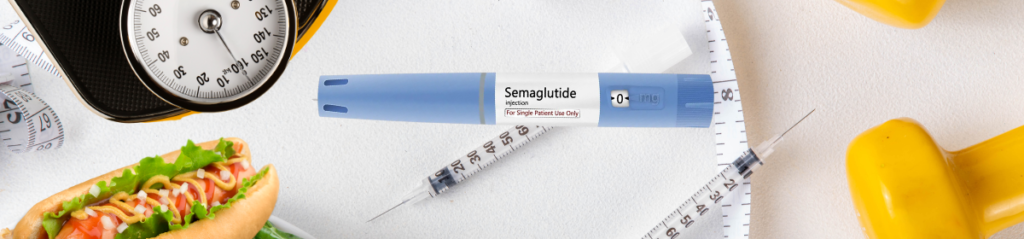
Semaglutide is a significant GLP-1 analogue marketed globally under the brand names Ozempic, Rybelsus, and Wegovy for the treatment of Type-2 diabetes and chronic weight management. In India, the active pharmaceutical ingredient is protected under Indian Patent No. IN 262697 (hereafter “suit patent”), titled “Acylated GLP-1 Analogs Comprising Non-Proteogenic Amino Acid Residue”, which expires on 20 March 2026.
Novo Nordisk does not manufacture Semaglutide in India and supplies the market through imports of finished formulations. Its earlier genus patent, IN 275964 (hereafter “genus patent”), filed in 2003 and covering a broad class of acylated GLP-1 analogues, expired on 17 September 2024.
Following the expiry of the genus patent, DRL obtained a manufacturing licence and commenced production of Semaglutide in April 2025. Upon learning that DRL, along with OneSource Specialty Pharma Ltd., was exporting Semaglutide in significant quantities, Novo Nordisk issued a cease-and-desist notice.
In response, DRL filed a revocation petition under Section 64 of the Patents Act, 1970, challenging the validity of the suit patent on grounds of prior claiming, lack of novelty, and obviousness. DRL contended that Semaglutide was already disclosed, claimed, and enabled in the expired genus patent IN’964.
On 29 May 2025, DRL undertook before the Delhi High Court not to sell Semaglutide in India and to restrict its activities to exports to jurisdictions where Novo Nordisk did not enjoy patent protection. The Court recorded this undertaking and allowed exports to continue. Novo Nordisk appealed this order, seeking to restrain all manufacture and export pending trial.
Arguments by Novo Nordisk
Novo Nordisk asserted that Semaglutide, as claimed in the suit patent, was novel and inventive. It argued that the compound’s enhanced pharmacokinetic profile, particularly its extended half-life and once-weekly dosing regimen represented a significant therapeutic advancement over earlier GLP-1 analogues.
Novo Nordisk submitted that DRL’s reliance on Example 61 of the genus patent to derive Semaglutide, by replacing Alanine with Aib (2-methyl alanine), was a classic case of impermissible hindsight reconstruction. It contended that the genus patent neither specifically disclosed nor claimed Semaglutide, and that none of the compounds described in the genus patent were ever developed into approved drugs. It also maintained that the genus patent was not a relevant prior art, as it was published after the priority date of the suit patent.
Novo Nordisk argued that DRL’s admitted manufacture of Semaglutide, even solely for export, violated its exclusive rights under Section 48 of the Patents Act. It contended that damages would not be an adequate remedy and asserted that DRL had failed to “clear the way” by challenging the suit patent before commencing commercial manufacture.
Arguments by Dr. Reddy’s Laboratories
DRL submitted that Semaglutide was merely a derivative of Example 61 in the genus patent, differing only by the substitution of Aib (2-methyl Alanine) for Alanine at position 8, a modification well known in the art and expressly taught in the genus patent.
DRL further contended that Novo Nordisk’s conduct in obtaining patent term extensions for both the genus and species patent across multiple jurisdictions amounted to an admission that Semaglutide fell within the scope of the claims of the genus patent.
Relying on the decision of the European Opposition Division, which shifted the effective priority date of the corresponding European patent application, from which the suit patent claimed priority, to 20 March 2006, DRL argued that the genus patent, published on 31 March 2005, constituted relevant prior art for assessing anticipation and inventive step. DRL also pointed out that WIPO’s International Search Report had classified the genus patent as a category “X” document, capable of independently destroying novelty or inventive step.
DRL further argued that Novo Nordisk’s own conduct, particularly the filing of single Form 27 statements covering both patents, constituted a clear admission that Semaglutide fell within the scope of the genus patent. Invoking the Gillette defence, DRL argued that a product covered by an expired genus patent could not infringe the later species patent.
Further, DRL submitted that the balance of convenience decisively favoured it, highlighting its investment of over ₹1,000 crores in manufacturing infrastructure and reiterating its court-recorded undertaking not to sell the product in India. With barely seven months remaining before the suit patent’s expiry, DRL argued that any restraint at this stage would cause it disproportionate and irreparable harm, while any alleged injury to Novo Nordisk could be adequately compensated by damages.
Court’s Observations
The Court reiterated that the grant of an interim injunction required Novo Nordisk to establish a strong prima facie case, particularly in light of the revocation challenge. Accepting the findings of the European Opposition Division, the Court found that the effective priority date of the suit patent was 20 March 2006, rendering the genus patent relevant prior art.
The Court also found substantial structural overlap between Example 61 of the genus patent and Semaglutide and noted that the classification of the genus patent as an “X” document in the International Search Report reinforced the prima facie challenge to novelty and inventive step.
The Court further noted inconsistencies in Novo Nordisk’s conduct, including its treatment of Semaglutide as covered by the genus patent in regulatory and statutory filings, as well as non-disclosure of material facts and misrepresentations regarding local manufacturing capabilities. Such conduct, the Court observed, undermined its claim to equitable relief.
The Court also observed that DRL, a frequent litigant in patent disputes, was well aware of the “clearing the way” principle, but began manufacturing without first challenging the suit patent. As a result, there was no balance of convenience in their favour to permit domestic sales in India until the expiry of the patent. However, the Court noted that, given the patent’s imminent expiry, this did not justify restraining manufacturing for export.
On the overall balance of convenience, the Court noted that Novo Nordisk’s exclusive reliance on imports, DRL’s undertaking not to sell the product in India, and the short remaining life of the suit patent all weighed against the grant of an injunction. Any potential loss to Novo Nordisk, the Court observed, could be adequately compensated by damages.
Conclusion
The Delhi High Court concluded that Novo Nordisk failed to establish a prima facie case for interim relief and that the suit patent was subject to serious and credible challenges based on anticipation and lack of inventive step. The application for interim injunction was accordingly dismissed.
DRL was permitted to continue manufacturing Semaglutide in India solely for export to non-patent jurisdictions, subject to its undertaking and disclosure obligations. The Court clarified that all findings were prima facie and would not prejudice the final adjudication at trial.
Citation: Novo Nordisk As vs Dr. Reddys Laboratories Limited & Anr on 2 December, 2025, Delhi HC. Accessible at https://indiankanoon.org/doc/39726850/
Article Review: Dr. Rukaya Amin Chowdery
