Summary
Natalja Eikje, a Norwegian researcher specializing in skin cancer, filed an Indian patent application for an in vitro FTIR microspectroscopy method that analyzes spectral patterns in biopsied skin tissue to characterize stages of carcinogenesis. The Joint Controller of Patents and Designs refused all sixteen claims of the application, relying on the Section 3(i) diagnostic methods exclusion under the Patents Act, 1970 (“Patents Act”), even though only six of those claims had been objected to on that ground. The Delhi High Court quashed the refusal, finding that the Controller had fundamentally misread the in vitro nature of the claimed method and had exceeded the scope of the Section 3(i) objection by rejecting claims that were never challenged. The ruling underscores that the line between an in vitro analytical method and a Section 3(i) diagnostic method is a technically and legally significant distinction that patent authorities must rigorously examine.
Background
The boundary between an analytical research tool and a patentable-versus-excluded diagnostic method has long been contested in Indian patent law. When the Patents Act bars “diagnostic methods” from patentability under Section 3(i), the question of precisely which methods clear that threshold has significant consequences for biotech and medical-device innovators seeking protection in India.
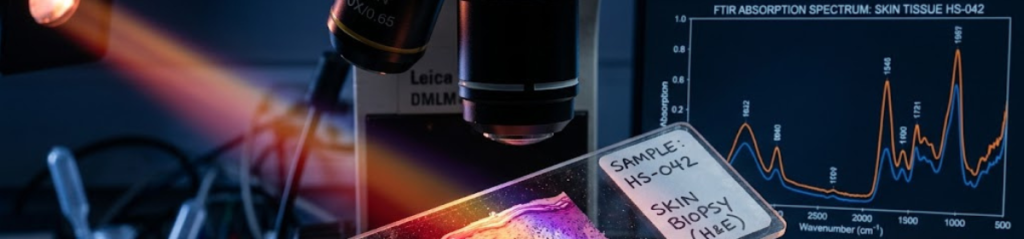
Natalja Eikje (“Eikje”), a Norwegian scientist whose research career spans dermatology, clinical physics, radiology, and physiological biophysics, developed a method for understanding how skin cancer progresses at the molecular level. Her invention involved an in vitro method of comparative spectral pattern analysis, using Fourier Transform Infrared (“FTIR”) microspectroscopy, to observe and characterize the intra-molecular and inter-molecular interactions of nucleic acids and proteins expressed in skin tissue samples across benign, premalignant, and malignant stages. A United States priority application was filed in February 2012, followed by a PCT international application in February 2013. The Indian national phase application, no. 7173/DELNP/2014, was filed in August 2014 and covered a total of sixteen claims spanning the spectral analysis method (claims 1–6), an FTIR microspectrometer apparatus (claims 7–10), and a combination group of nucleic acids and proteins with characteristic spectral parameters (claims 11–16).
The First Examination Report, issued in February 2021, raised objections under Sections 2(1)(ja), 3(d), 3(i), and 3(k) of the Patents Act, but only against claims 1–6. Eikje filed a substantive reply in August 2021, accompanied by amended claims, and completed post-hearing written submissions in October 2023. Notwithstanding these responses, the Joint Controller of Patents and Designs (“Controller”) refused the entire application by order dated 15 April 2024, rejecting all sixteen claims solely on the ground that claims 1–6 were not patentable under the Section 3(i) diagnostic methods bar. Eikje challenged that refusal before the Delhi High Court under Section 117A of the Patents Act.
Issues Before the Court
-
- Whether the Controller could validly reject claims 7–16 under Section 3(i) of the Patents Act when no objection under that provision was raised against those claims in the First Examination Report.
- Whether claims 1–6, disclosing an in vitro method of comparative FTIR spectral pattern analysis of nucleic acids and proteins in biopsied skin tissue samples, constitute a “diagnostic method” excluded from patentability under the Section 3(i) diagnostic methods bar of the Patents Act.
Eikje’s Arguments
-
- Claims 7–16 had attracted no objection in the FER; the Controller was bound to grant them even if claims 1–6 faced a Section 3(i) bar. Rejecting all sixteen claims without any independent basis for refusing claims 7–16 was legally unsustainable and alone warranted setting aside the impugned order.
- Claims 1–6 disclosed an in vitro method, meaning a process performed entirely outside a living organism using isolated tissue samples in a controlled laboratory environment. The Controller had misread the claims as a diagnostic process performed on patients, which directly contradicted the express in vitro characterization.
- A test properly qualifying as a “diagnostic method” under Section 3(i) must inherently identify a disease or condition for potential treatment. The FTIR spectral method did not do so; it provided intermediate analytical findings relating to spectral patterns in nucleic acids and proteins, not a definitive disease identification.
- The claimed method enabled simultaneous observation and characterization of intra-molecular and inter-molecular interactions for nucleic acids and proteins expressed in the IR spectrum of epidermis, in order to understand molecular, cellular, and tissue changes during carcinogenesis. This was fundamentally an analytical characterization process, not a method of diagnosis.
- The Controller failed to technically comprehend the metes and bounds of the claimed invention, rendering the impugned order legally untenable.
Controller’s Arguments
-
- Reading claims 1–6 in full revealed a diagnostic process: the method characterized multistage epidermal carcinogenesis and indicated the grade of neoplastic activity in cells on biopsied tissue, amounting to determining the type and progression of a tumor.
- “Diagnosis” connotes the discovery of the source and nature of illness from its symptoms; the end result of the claimed method was a definitive medical determination regarding the presence, nature, and stage of disease.
- The use of FTIR microspectroscopy as a technical tool did not change the nature of the outcome, which remained diagnostic.
- Reliance was placed on the Madras High Court’s ruling in Chinese University of Hong Kong and Another v. Assistant Controller of Patents & Designs, 2023 SCC OnLine Mad 6372, which held that any process leading to identification, detection, or determination of a disease, its condition, or its progression qualifies as a diagnostic method under Section 3(i).
Court’s Observations and Analysis
Procedural Error: Rejecting Claims Never Challenged
The court observed that the undisputed factual position was that when the First Examination Report was issued, claims 7–16 attracted no objection under Section 3(i) of the Patents Act. The Controller nevertheless rejected all sixteen claims on the basis of Section 3(i) alone, providing no independent basis for refusing claims 7–16. The court noted that this was a blatant error in the impugned order that could not be countenanced in law. Whatever the outcome of the Section 3(i) diagnostic methods analysis with respect to claims 1–6, the Controller was required to assess claims 7–16 independently and pass appropriate orders. The blanket refusal of the entire application, including claims that had never been challenged under any provision, was itself sufficient to vitiate the order.
Misreading the In Vitro Scope of Claims 1–6
On the substantive Section 3(i) question, the court found that the Controller had committed a fundamental error in technically comprehending the claimed invention. The court observed that the term “in vitro” carries a precise scientific meaning: it refers to studies, experiments, or tests performed outside a living organism, in a controlled laboratory environment, using isolated components of an organism, whether cells, tissues, or molecules, separated from their normal biological surroundings and placed in test tubes, petri dishes, or similar apparatus. Claims 1–6 expressly confined themselves to such an in vitro method.
The court further observed that the Controller’s reasoning was premised on the erroneous assumption that the claimed method was a diagnostic process performed on patients. The court noted that this assumption directly contradicted the express scope of the claims and was unsupported by the scientific literature or the text of the application. Eikje had specifically raised before the Controller that the claimed method produced intermediate analytical findings relating to the spectral characterization of nucleic acids and proteins expressed in biopsied tissue, and that these findings did not, by themselves, identify a disease or condition for treatment. None of these submissions had been engaged with in the impugned order.
The court stated that a test qualifying as a “diagnostic method” under the Section 3(i) diagnostic methods exclusion should inherently identify a disease or condition for potential treatment. The FTIR spectral method, by contrast, provided data about intra-molecular and inter-molecular interactions in nucleic acids and proteins across stages of carcinogenesis, intended to advance the scientific understanding of how skin cancer progresses at the molecular level. The court held that the Controller’s failure to engage with the in vitro nature of the claims, and its conflation of an analytical characterization method with a diagnostic process, rendered the impugned order legally untenable. Rather than decide the Section 3(i) question on its merits, the court chose to remand the matter to give the Controller the opportunity to apply the correct legal and technical framework to the claims.
Findings
In view of the observations and the arguments presented by both the parties, the Delhi High Court held that:
-
- The impugned order dated 15 April 2024, refusing patent application no. 7173/DELNP/2014 in its entirety, was quashed and set aside.
- The matter was remanded to the Controller for fresh reconsideration of the patent application in accordance with law.
- The Controller was directed to pass a decision within three months, after granting Eikje an opportunity of hearing.
- The decision was to be based on existing material on record and was not to be influenced by the observations in the court’s order or in the impugned order.
Case Citation: Natalja Eikje v. Joint Controller of Patents and Designs, C.A.(COMM.IPD-PAT) 58/2024, High Court of Delhi, decided on 22 April 2026. Available at http://indiankanoon.org/doc/27459140/
Authored by Gaurav Mishra, Patent Attorney, BananaIP Counsels