Summary
Arti Srivastava filed a patent application in 2006 for a system and method to detect counterfeit products using two codes on a product label : one visible, one hidden beneath a scratchable coating. After the Assistant Controller of Patents rejected the application for lack of inventive step and insufficient disclosure, Srivastava appealed to the Delhi High Court. The court dropped the inventive step objection after finding that the primary prior art document had been published after the filing date, but upheld the rejection on insufficient disclosure under Section 10(4)(a), finding that the specification left too many critical implementation details unexplained. The ruling is a pointed reminder that a patent application must enable a person skilled in the art to work the invention, not merely understand its concept.
Background
A patent application can survive a novelty challenge and still fail where it matters most: in the telling. Arti Srivastava filed patent application no. 1774/DEL/2006, titled “Method and System for Detecting Counterfeit Products,” before the Indian Patent Office on 03 August 2006. The invention addressed a genuine and commercially significant problem: the inability of ordinary consumers to verify whether a product they were purchasing was genuine.
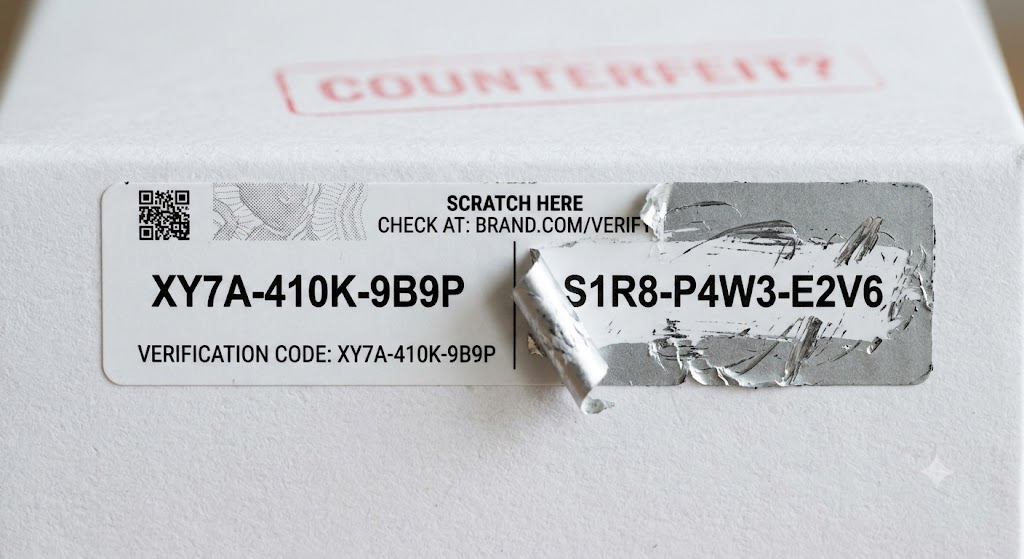
The proposed solution was a dual-code label system. Each product would carry two alphanumeric codes — one visible to the buyer, and a second concealed beneath a scratchable coating. A consumer suspecting a fake could transmit both codes to a central data centre (via telephone, fax, SMS, email, or internet), which would then verify the codes against its records and communicate the result back to the user. The data centre would also log repeated enquiries against the same codes, enabling manufacturers to track potential counterfeiting activity.
The application moved through the Patent Office without urgency. After the First Examination Report was issued in June 2011, Srivastava filed her response in May 2012 and attended a hearing in July 2013, submitting post-hearing written submissions in December 2013. The Assistant Controller of Patents (Controller) rejected the application on 31 January 2014 on two grounds: lack of inventive step under Section 2(1)(ja) of the Patents Act, 1970 (Act), relying on prior art documents D1 and D5, and insufficient disclosure under Section 10(4)(a). Aggrieved by the Controller’s decision, Srivastava appealed to the Delhi High Court.
Issues
-
-
- Whether the Controller’s rejection on the ground of lack of inventive step under Section 2(1)(ja), relying on prior art document D1, was sustainable given the relative filing and publication dates of D1 and the subject application.
- Whether the complete specification satisfied the disclosure requirement under Section 10(4)(a) of the Patents Act, to the extent that a person skilled in the art could implement the claimed invention without further research or invention.
- Whether claim 1 of the subject application was fairly based on the matter disclosed in the complete specification, as required by Section 10(5) of the Act.
-
Arti Srivastava’s Arguments
-
-
- The core inventive step, the presence of two simultaneous codes (one visible, one hidden beneath a scratchable coating) on a single product label, was not disclosed in either prior art D1 or D5. The Controller simply overlooked this.
- The complete specification, read with the figures and flow charts, sufficiently disclosed the invention’s operation. The modes of transmitting the codes (telephone, fax, SMS, email, internet) and the method of comparison at the data centre were clearly set out.
- All steps subsequent to the dual-code feature were obvious to a person skilled in the art (PSITA) and did not require separate detailed disclosure. Since the only genuine inventive step was the provision of two codes, the Controller’s non-disclosure objection was misdirected.
- Amended claim 1 (system) and claim 5 (method), taken together with the diagrams, adequately described the invention’s operation and use.
-
Assistant Controller’s Arguments
-
-
- For a system claim, the patentee must disclose the internal components of the transmitter, receiver, and processor, as well as a flow chart describing, step by step, how genuineness is verified. The complete specification fell short on both counts.
- The data centre, lacking human intelligence, would require input codes to be converted into digital form before processing. The specification did not disclose the conversion mechanism.
- There was no disclosure of how the data centre would digitally process the codes to authenticate a product, or how the outcome of that comparison would be converted back into a voice signal, SMS, or email and communicated to the user.
- The respondent expressly did not sustain the inventive step objection under Section 2(1)(ja) before the High Court.
-
Court’s Observations and Analysis
Inventive Step Objection not valid
The court noted at the outset that the Controller’s inventive step rejection rested primarily on prior art document D1, titled “Method and System for Deterring Product Counterfeiting, Diversion and Piracy.” On examining the dates, the court found that D1 was published on 10 August 2006, seven days after Srivastava filed her application on 03 August 2006. The court held that a document published after the filing date cannot validly be cited as prior art. Since D1 was the primary prior art underpinning the Section 2(1)(ja) rejection, and the respondent itself chose not to sustain that objection before the High Court, the inventive step ground did not survive.
Sufficiency of disclosure is mandatory
The court observed that Section 10(4)(a) requires a complete specification to fully and particularly describe the invention, its operation or use, and the method by which it is to be performed. The court noted that this is not a mere formality: a patent is granted for an invention capable of practical use, and the specification must deliver enough information for a PSITA to work the invention without conducting further research or making further inventions of their own.
Referring to the Bombay High Court’s decision in Farbwerke Hoechst vs Unichem Laboratories, the court noted that insufficiency of description has two branches: the specification must describe an embodiment of each claimed invention in enough detail for those in the relevant industry to implement it without further inventions, and the description must not be unnecessarily difficult to follow. The court also drew on its own earlier decision in Titan Umreifungstechnik GMBH and Co. KG v. Assistant Controller of Patents and Designs, which affirmed that the applicant must disclose the best known method of performing the invention clearly enough for a PSITA to reproduce it.
Where the Specification Failed
The court found that the complete specification left several critical elements of the claimed system unexplained. While the figures and flow charts described the modes of transmitting the dual codes to the data centre, the specification did not disclose how the data centre would digitally process the received codes, what protocols, security standards, or error-handling mechanisms were involved in the transmission, or how the outcome of the comparison would be converted from digital form into a voice message, SMS, or email for delivery back to the user. The court further observed that the specification also failed to address how the data centre would generate the visible and hidden codes in the first instance, including the generation logic, metadata linkage, and encryption safeguards.
The court observed that these were not peripheral details that could safely be left to the PSITA’s common knowledge. They were essential components of the claimed system. In the court’s view, leaving these elements for the PSITA to work out independently crossed the line from enabling disclosure into requiring further independent research or invention, precisely what Section 10(4)(a) prohibits.
The Fair Basing Requirement Under Section 10(5)
Going beyond the grounds upheld by the Controller, the court found an additional infirmity. Claim 1 of the subject application claims a “processor” to verify and match the received product code and a “transmitter” to report results back to the user. The court observed that the complete specification contained no corresponding disclosure of how either component actually functioned. Citing the Madras High Court’s analysis in Caleb Suresh Motupalli vs Controller of Patents, the court noted that Section 10(5) requires claims to be fairly based on the matter disclosed in the specification, and that a claim covering an unimplementable or unworkable embodiment cannot meet that standard. The court held that claim 1 failed this test.
Findings
In view of the observations and the arguments presented by both the parties, the court held that:
-
-
- Prior art document D1, published on 10 August 2006, post-dated the filing of the subject application on 03 August 2006 and could not validly be cited as prior art. The inventive step objection under Section 2(1)(ja) therefore could not survive.
- The complete specification failed to meet the disclosure standard under Section 10(4)(a) of the Patents Act. The specification did not adequately describe the method of digital processing at the data centre, the transmission protocols and security mechanisms, the conversion of processed information into the communication format returned to the user, or the generation logic and encryption safeguards for the dual codes.
- Claim 1 of the subject application was not fairly based on the matter disclosed in the complete specification, as required by Section 10(5) of the Act, since neither the “processor” nor the “transmitter” claimed in Claim 1 had corresponding enabling disclosure in the specification.
- The appeal was dismissed.
-
Case Citation: Arti Srivastava v. The Assistant Controller of Patents, C.A.(COMM.IPD-PAT) 252/2022, Delhi High Court, decided on 11 May 2026. Available on https://indiankanoon.org/doc/171834901/
Authored by Gaurav Mishra, Patent Attorney, BananaIP Counsels
