Summary
The Delhi High Court granted an ex parte ad interim injunction in favour of Shimow Hospitality Private Limited, which runs Bengaluru-style dosa outlets under the mark BENNE, against M/s Benne Delhi, a cloud kitchen offering identical South Indian cuisine under the same name. The court found a prima facie case in the plaintiff's favour, noting that the defendant had applied to register its mark only in April 2026 on a "proposed to be used" basis, while the plaintiff had been using BENNE since 2024. The defendant was restrained from using BENNE, BENNE DELHI or any similar mark, including as a trade name, domain name or social media handle, until the next date of hearing.
Background
Indian food brands today are built at a pace that would have been unthinkable a decade ago. A single outlet, a few viral food vlogs and a presence on delivery apps can turn a neighbourhood concept into a recognised brand within months. That speed, however, also invites imitation, and the question that follows is whether goodwill earned quickly is protected as strongly as goodwill earned over decades. This case offers an early answer.
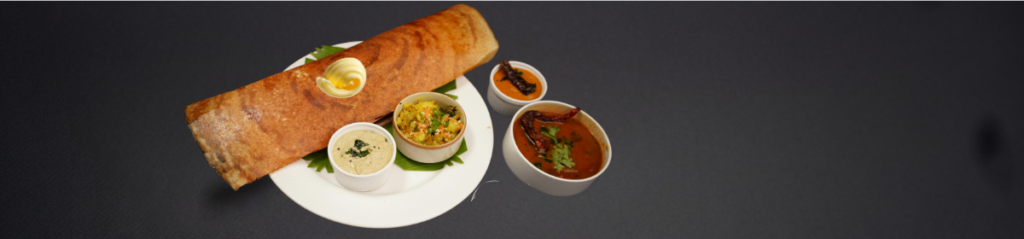
Shimow Hospitality Private Limited (the plaintiff) began as Shimow Foods LLP and was later incorporated as a private limited company. In 2023-24, it conceptualised the mark BENNE for its dining outlets, drawing inspiration from the Darshini culture of Bengaluru. “Benne” means butter in Kannada and is commonly seen on South Indian menus in the form of benne dosa. The rights in the mark were assigned by the LLP to the company through a deed dated 13 July 2026.
The plaintiff opened its first outlet in Bandra, Mumbai in April 2024 and now operates five outlets, three in Mumbai and two in Delhi NCR. Its outlets follow a quick-service format with self-service kiosks, standing tables and heritage-inspired decor, and use a circular logo along with the tagline “HERITAGE BANGALORE DOSA”. The plaintiff placed on record media coverage, food influencer content, visits by well-known personalities and steadily rising turnover. It had also filed trademark applications for its marks and claimed copyright in its logo as an artistic work.
In August 2026, the plaintiff came across M/s Benne Delhi (the defendant), which was running a cloud kitchen and/or outlet under the name BENNE for identical cuisine. A search of the Trade Marks Registry revealed that the defendant had applied to register its mark in Class 43 in April 2026 on a “proposed to be used” basis. The defendant was also listed on Swiggy and Magicpin and was advertising on YouTube and Instagram. The plaintiff filed a suit for infringement and passing off and sought an urgent ex parte interim injunction.
Issues
-
- Whether the plaintiff had made out a prima facie case for an ex parte ad interim injunction against the defendant’s use of BENNE and BENNE DELHI.
- Whether the plaintiff’s goodwill, built within about two years of use, was sufficient to restrain an identical mark used for identical services.
Plaintiff’s Arguments
-
- The plaintiff argued that its continuous and extensive use of BENNE, backed by strict quality control across outlets, had generated substantial goodwill and reputation within a short span of time.
- It contended that the mark had acquired secondary meaning and was associated by consumers exclusively with the plaintiff’s outlets, aided by its consistent visual identity, logo and tagline.
- It submitted that the defendant’s April 2026 application on a “proposed to be used” basis showed that the defendant had not used the mark before that date, making the plaintiff the undisputed prior user.
- It argued that the defendant was using an identical mark for identical services and cuisine, through the same trade channels such as food delivery platforms and social media, which was bound to cause confusion and suggest an association with the plaintiff.
- It contended that the adoption was deliberate and intended to ride on the plaintiff’s goodwill, and that it diluted the distinctive character of the plaintiff’s marks.
Defendant’s Arguments
The order was passed ex parte at the first hearing. The defendant was not represented, and notice was issued for it to file a reply within four weeks.
Courts Analysis
Prior Use and the “Proposed to be Used” Filing
The decisive fact in the plaintiff’s favour was the defendant’s own trademark application. By filing in April 2026 on a “proposed to be used” basis, the defendant effectively admitted that it had no use of BENNE before that date. Against this, the plaintiff showed use from April 2024. Under Indian law, the first user of a mark generally prevails over a later adopter, and the defendant’s own record made the timeline easy for the court to accept at the interim stage. The lesson for businesses is that a “proposed to be used” filing can later become evidence against the applicant in a priority dispute.
Goodwill Earned in a Short Span
The plaintiff had been in business for only about two years. The court nonetheless accepted, at the prima facie stage, that the mark had acquired goodwill on the strength of its outlets across two cities, media and influencer coverage, and growing turnover. The order reflects the practical reality that reputation in the food and hospitality sector today is driven by digital visibility as much as by duration of use. What matters is the evidence of public recognition, not merely the number of years.
Identical Mark, Identical Services, Identical Channels
The case presented the clearest form of conflict. Both parties used BENNE, both served South Indian cuisine and both reached consumers through delivery apps and social media. The defendant’s addition of “DELHI” did little to distinguish it, particularly since the plaintiff already operated in Delhi NCR. A consumer ordering online would reasonably assume that “Benne Delhi” was the Delhi branch of the plaintiff’s brand. In such circumstances, the likelihood of confusion is close to inevitable.
A Descriptive Word on the Menu
An interesting point that the court did not need to address at this stage is that “benne” is a Kannada word for butter and a common menu term. A defendant could argue that the word describes a dish and cannot be monopolised for South Indian food. The plaintiff anticipated this by pleading secondary meaning. Whether the descriptiveness defence is raised, and how the court treats it once the defendant appears, will be worth watching.
Scope of the Injunction
The injunction is notably wide. It covers use of BENNE, BENNE DELHI and similar marks not only as a trademark but also as a trade name, corporate name, domain name and social media handle. It also extends to permitting third parties to use or advertise the marks, which would cover listings on delivery and marketing platforms. The court also exempted the plaintiff from pre-institution mediation under Section 12A of the Commercial Courts Act, 2015, finding the relief to be genuinely urgent.
Findings
In view of the observations and the arguments presented by the plaintiff, the court held that:
-
- The plaintiff had made out a prima facie case for the grant of an ex parte ad interim injunction.
- The balance of convenience was in favour of the plaintiff, and the plaintiff would suffer irreparable loss and injury if the injunction was not granted.
- Until the next date of hearing, the defendant and all persons acting on its behalf were restrained from using, marketing or advertising BENNE, BENNE DELHI or any identical or similar mark, whether as a trademark, trade name, corporate name, domain name, social media handle or in any other manner, so as to pass off its services as those of the plaintiff.
- The plaintiff was exempted from pre-institution mediation, and was directed to comply with Order XXXIX Rule 3 CPC within two weeks.
- The matter was listed before the Joint Registrar on 9 December 2026 and before the court on 9 February 2027.
Case Citation: Shimow Hospitality Private Limited v. M/s Benne Delhi Through Its Proprietor, CS(COMM) 1131/2026, Delhi High Court, order dated 16 October 2026. The order may be viewed and downloaded from here – Shimow Hospitality v. Benne Delhi.
Authored by Gaurav Mishra, IP Attorney, BananaIP Counsels