
Summary
An appeal was filed under Section 91 of the Trade Marks Act, 1999 against dismissal of opposition to registration of the word mark JBR in Class 12. It was observed that the competing marks were identical in their dominant feature and that motor parts and vehicle covers were allied goods sold through similar trade channels. The prohibition under Section 11 was held to be attracted due to likelihood of confusion as to trade source. The registration was directed to be cancelled under Section 57 after the Registrar’s order was set aside.
Background of the case:
The present appeal was filed by Karan Rathore (hereinafter referred to as “the Appellant”) under Section 91 of the Trade Marks Act, 1999 (hereinafter referred to as “the Act”) against the order of the Registrar of Trade Marks dismissing the Appellant’s opposition to the registration of the JBR trade mark (hereinafter referred to as “the impugned mark”) in the name of Shivam Rathore (hereinafter referred to as “Respondent No. 2”).
The Appellant derived title to the device mark ‘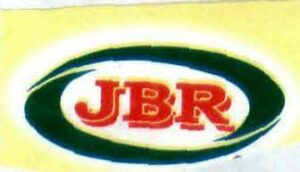 /JBR’ through an Assignment Deed executed in its favour by its predecessor-in-interest, M/s Tushar Auto Spares. The said mark was registered with a user claim dating back to 04.06.2000.
Respondent No. 2 filed an application for registration of the word mark ‘JBR’ on 18.03.2023 in respect of car covers, bike covers and vehicle covers in Class 12, claiming user since 16.07.2020. The application was advertised and thereafter opposed by the Appellant.
Despite the opposition and evidence filed by the Appellant, the Registrar dismissed the opposition and granted registration in favour of Respondent No. 2, leading to the present appeal.
Questions raised:
-
- Whether the JBR trademark applied for by Respondent No. 2 was deceptively similar to the Appellant’s registered mark.
- Whether motor parts and vehicle covers constituted similar or allied goods under Class 12.
- Whether registration of the Impugned Mark was barred under Section 11 of the Trade Marks Act, 1999.
- Whether the Registrar had erred in concluding absence of likelihood of confusion.
Submissions on Behalf of the Appellant:
It was submitted that the Appellant’s mark had been adopted by its predecessor-in-interest and had been continuously used since then. It was contended that Respondent No. 2 had earlier obtained express authorization from the Appellant’s predecessor, to use the Impugned mark for sale of products on e-commerce platforms, thereby acknowledging the Appellant’s rights in the mark.
It was further submitted that the subject application had been filed by Respondent No. 2 with prior knowledge of the Appellant’s mark and its longstanding commercial use, which demonstrated mala fide adoption of the impugned mark. It was submitted that the Registrar had erroneously held motor parts and vehicle covers to be dissimilar goods without assigning any reasons, despite both being automotive accessories sold through common trade channels and targeted at the same consumer base.
Relying on Punjab Tractors Ltd. v. Pramod Kumar Garg, it was argued that likelihood of confusion depends on the resemblance of the marks and the similarity or affinity of the goods such that consumers would assume a common trade source.
Submissions on Behalf of Respondent No. 2
It was submitted that the Appellant was neither the prior user nor the adopter of the word mark ‘JBR’. It was contended that the subject application had been filed prior to the execution of the Assignment Deed between the Appellant and its predecessor, and that the Appellant’s predecessor had never traded in vehicle covers, car covers, or bike covers under the said mark.
It was argued that the claim of prior use by the Appellant was based solely on the Assignment Deed, which was untenable, as the predecessor had not dealt in the relevant goods using the mark. It was further submitted that the subject application pertained to a word mark, whereas the Appellant’s mark was a device mark, and that the two marks were distinct in nature.
It was contended that the authorization granted by the Appellant’s predecessor was not related to the goods dealt with by Respondent No. 2 and, therefore, no extension of such authorization was sought. It was stated that after the opposition was filed, a detailed reply and evidence had been placed on record by Respondent No. 2, and upon granting a proper hearing to both parties, the impugned order had been passed by the Registrar.
Reliance was placed on the decisions in Nandhini Deluxe v. Karnataka Cooperative Milk Producers Federation Ltd. and Vishnudas Trading v. Vazir Sultan Tobacco Co. Ltd. to submit that identical marks could coexist in respect of different goods and that registration for certain goods under a class did not confer monopoly over the entire class.
It was argued that motor parts and vehicle covers were distinct in nature, purpose, and trade channels, and that the Appellant’s predecessor had never dealt in vehicle covers.
Reasoning and Analysis
It was noted that the Appellant’s mark stood registered in Class 12 in respect of motor parts with a user claim dating back to the year 2000, whereas the subject application for the impugned mark claimed user from 16.07.2020 for vehicle covers. It was further noted that the Appellant’s mark had been assigned in its favour by its predecessor through an Assignment Deed.
It was observed that the Appellant’s opposition to the subject application had been dismissed by the Registrar on the ground that the Appellant’s registration was confined to motor parts and did not extend to vehicle covers, and that monopoly over the entire class could not be claimed.
The Court considered whether a likelihood of confusion arose from the use of the Impugned Mark on the goods of Respondent No. 2. It was found that the dominant and essential feature of the Appellant’s mark was the word “JBR” and that the competing marks were structurally, phonetically, and conceptually identical.
While relying on the principles laid down in FDC Limited v. Docsuggest Healthcare Services Pvt. Ltd. for determining similarity of goods, it was held that motor parts and vehicle covers constituted automotive accessories used in relation to vehicles. The Court noted that both goods shared a common consumer base, and were sold through similar trade channels.
It was further noted that Respondent No. 2 had earlier been authorized to sell vehicle covers under the Appellant’s mark on e-commerce platforms, which indicated acceptance of the Appellant’s rights in the mark with respect to such goods.
It was held that an owner of a trade mark was entitled to expand its range of goods as a natural extension of its business and that, from a commercial and business perspective, confusion was likely to arise in the minds of the purchasing public regarding the trade source of the goods.
Accordingly, it was concluded that both identity of marks and similarity of goods had been established and that the prohibition under Section 11 of the Act was attracted. The registration of the Impugned Mark was therefore liable to be refused. In view of the above findings, the appeal was allowed, setting aside the impugned order. Consequently, the registration of the Impugned Mark in favour of Respondent No. 2 was directed to be cancelled under Section 57 of the Act.
Citation: Karan Rathore vs Registrar Of Trade Marks & Anr, Delhi High Court, on 17 January, 2026, C.A.(COMM.IPD-TM) 23/2024 & I.A. 9027/2024. Available at: https://indiankanoon.org/doc/153580873/.
Authored by Ms. Ananya Nadajoshi and reviewed by Ms. Benita Alphonsa Basil.