The Madras High Court looked at a copyright ownership dispute over the music of Salangai Oli, Sagara Sangamam, and Shankarabharanam, where both parties claimed rights through assignments from the original producers. The court held that while the claim for a declaration of ownership was time-barred, the plaintiff could still pursue the case for infringement and ask for a permanent injunction to prevent infringement of asserted rights.
Read more about Music Copyright Dispute Over Sagara Sangamam, and Shankarabharanam: Infringement Remedy Survives Even if Declaration Is Time-BarredAuthor: Dr. Kalyan Kankanala
Dr. Kalyan Kankanala is a practicing intellectual property (IP) attorney and author. He is a senior partner at BananaIP Counsels, a well-known IP firm based in Bangalore, India. His writings cover a range of topics relating to IP law, business, and policy, and he has authored several books and articles in the field. He has been contributing to this blog since 2007.
The views expressed here are his own and do not represent those of BananaIP Counsels or its members.
When Authors Sign Away Rights: Producer–Author Copyright Contracts Tested in Bombay High Court

In the case of Rao and Sapru Films Pvt. Ltd. v. Alok Kumar, the Bombay High Court analysed a contractual dispute between a producer and a music director–singer over rights in ten songs. The court held that the producer, who had paid consideration and obtained signed assignments, was the copyright holder, and the author could not assert rights after the fact without setting aside the agreements.
Read more about When Authors Sign Away Rights: Producer–Author Copyright Contracts Tested in Bombay High CourtCoconut Oil Bottle Trade Dress Protection and Injunction Confirmed
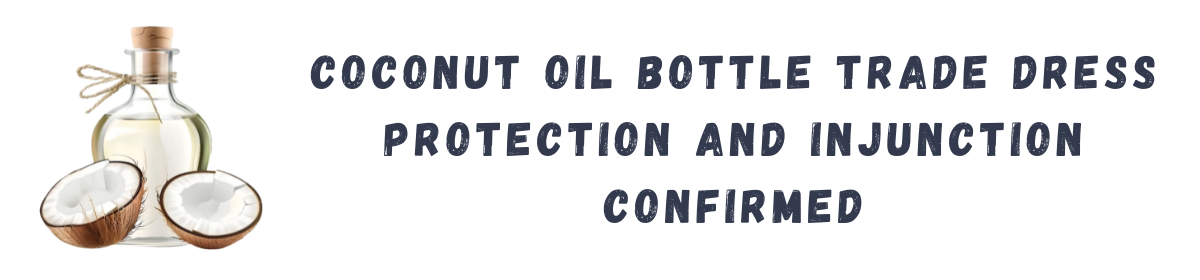
In the case of Edible Products (India) Limited vs Shalimar Chemical Works Private Limited, the Calcutta High Court considered whether the trade dress of coconut oil bottles—including shape, colour scheme, and packaging—was being passed off by a rival trader. The court concluded that the plaintiff’s trade dress had acquired distinctiveness and was entitled to protection under the law of passing off.
Read more about Coconut Oil Bottle Trade Dress Protection and Injunction ConfirmedBirkin Bag’s Three-Dimensional Trade Dress Recognised as Well-Known by Delhi High Court

In the case of Hermes International & Anr vs Macky Lifestyle Private Limited & Anr, the Delhi High Court examined whether the shape and configuration of the Birkin bag—registered as a three-dimensional mark—met the requirements for being declared a well-known trademark. The court found that the trade dress had acquired widespread recognition in the luxury fashion market among the relevant public making it well known.
Read more about Birkin Bag’s Three-Dimensional Trade Dress Recognised as Well-Known by Delhi High CourtOnce the Hearing Is Fixed, the Door Closes on New Evidence in Patent Oppositions

In the case of M/s Hi Tech Chemicals Limited vs Deputy Controller of Patents and Designs & Anr., the Madras High Court examined whether documents labeled as additional evidence could be admitted after the hearing was fixed in a post-grant patent opposition. The Court looked at the patent rules, and held that private documents do not qualify as “publications” under Rule 62(4), and are therefore not admissible after the hearing date was fixed.
Read more about Once the Hearing Is Fixed, the Door Closes on New Evidence in Patent OppositionsIlaiyaraja Cannot License Naguva Nayana, Delhi HC Says Producer Owns Copyright
In the case of Saregama India Limited vs Black Madras Films & Ors, the Delhi High Court upheld the copyright ownership of the plaintiff over the song Naguva Nayana, rejecting composer Ilaiyaraja’s authority to license it. The Court said the defendants could release their film only after depositing a licence fee, if they continued to use the song.
Read more about Ilaiyaraja Cannot License Naguva Nayana, Delhi HC Says Producer Owns CopyrightFilm Shivajiraje Bhosale Boltoy Fails Copyright Test: Title, Script, and Ads Not Infringing

In the case of Everest Entertainment LLP vs. Mahesh Vaman Manjrekar, the Bombay High Court considered whether copyright subsists in the title Me Shivajiraje Bhosale Boltoy, and whether the defendants infringed the script or promotional content of the film. The Court found no substantial reproduction of the script or advertisements, and held that copyright protection does not extend to the film’s title.
Read more about Film Shivajiraje Bhosale Boltoy Fails Copyright Test: Title, Script, and Ads Not InfringingTowards an Inclusive and Accessible IP Society and Ecosystem: Happy International Day of Persons with Disabilities
On this International Day of Persons with Disabilities, we put forth the need for an inclusive IP ecosystem. For many IP attorneys, innovators, and creators with disabilities, accessibility hurdles continue to make engagement difficult and exclusionary. A system that is accessible by design, responsive to facilitation requests, and welcoming of diverse contributors can transform the IP landscape and ensure that persons with disabilities are recognised as equal and essential members of the creative and innovative community.
Read more about Towards an Inclusive and Accessible IP Society and Ecosystem: Happy International Day of Persons with DisabilitiesComments and Suggestions on Patent Agent Code of Conduct and Patent Rules Draft

DPIIT’s publication of the draft rules and draft Code of Conduct has provided an opportunity for stakeholders to share their views on the future regulatory framework for patent agents. Patent agents at BananaIP Counsels have responded with detailed comments at general and specific levels, offering suggestions that aim to make the framework more practical and suitable for modern patent practice. Their submission seeks to contribute to a balanced ecosystem that enables the continued growth of innovation in India.
Read more about Comments and Suggestions on Patent Agent Code of Conduct and Patent Rules DraftUrgency in Patent Infringement Disputes: Supreme Court on Mediation Requirement

In the case of Novenco Building and Industry A/S vs Xero Energy Engineering Solutions Pvt. Ltd., the Supreme Court ruled that mandatory mediation under the Commercial Courts Act can be bypassed in intellectual property cases where continuing infringement creates immediate harm. The Court stated that urgency must be assessed from the perspective of ongoing injury, not simply on the basis of when the suit was filed.
Read more about Urgency in Patent Infringement Disputes: Supreme Court on Mediation Requirement